
Geoprox areas and center points
A geoprox area is a piece of a district that shares one run order: every address inside it is dispatched the same way. Its center point is the one spot the run order is measured to.
What a geoprox is
A dispatch center divides a district into areas and gives each a code. When a call comes in, the address falls in one area and the center sends that area's run order. The run order for the area is the run order for its center point, so the point has to stand for the whole area.
How the center point is picked
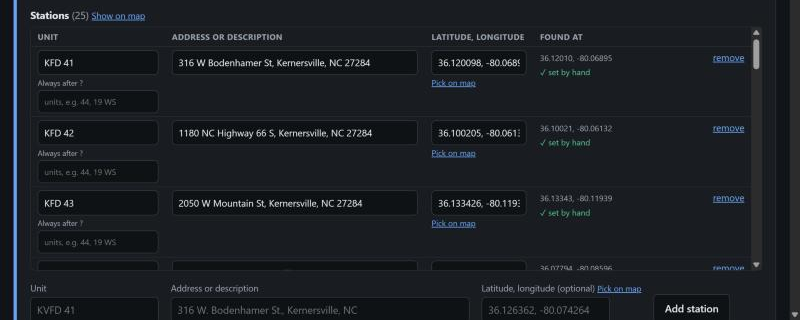
Pick the spot that best stands for the area: usually the address nearest its middle, or the intersection most calls would route through. An address works; so does a latitude and longitude, for a spot with no address. Where the address lookup lands on the wrong place or the wrong street, pick the spot on the map instead. The page flags a point it had to reach by a road other than the one in its address, so a point that landed behind a building or on the wrong side of a parkway gets moved to its entrance before the run order is trusted.
Should an area be split?
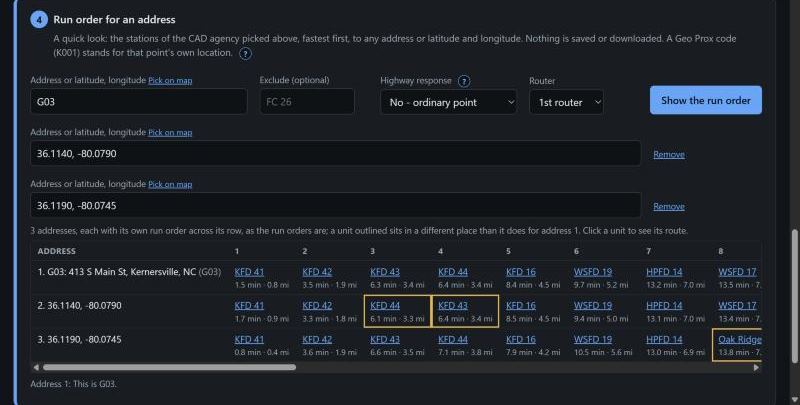
An area that holds two kinds of streets, a highway and the neighborhoods beside it, or a ridge with one road over it, may not have one right run order. Type up to three addresses inside the area and compare their run orders side by side. If the first-due units differ from one address to the next, the area is doing two jobs and should be split.
Highway points and the opposing-direction rule
A spot on a divided highway sits between the lanes. Mark it as a highway response and each unit is timed to whichever direction of travel it reaches first, and shows which one (EB, WB, NB, SB), so the closest unit wins whichever side it arrives on. The opposing rule goes one step further: the first two units come from opposite directions, so a crash can be reached from both sides of the median.
Next: the run card built from these points, and what the CAD center gets.
Start a 10-day free trial No card needed. · Pricing · How it works